Professional Metal Cutting Disc Manufacturer for Industrial Use
Achieving a precision cut in heavy-duty ferrous metals requires more than just a power tool; it demands an abrasive medium engineered for stability and speed. For industrial operators dealing with rebar, angle profiles, and thick-walled pipes, the choice of a cutting wheel directly impacts both operational safety and the cost per cut. The 125mm resin-bonded aluminium oxide disc is designed specifically to balance aggressive material removal with a controlled thermal profile, preventing premature workpiece warping.
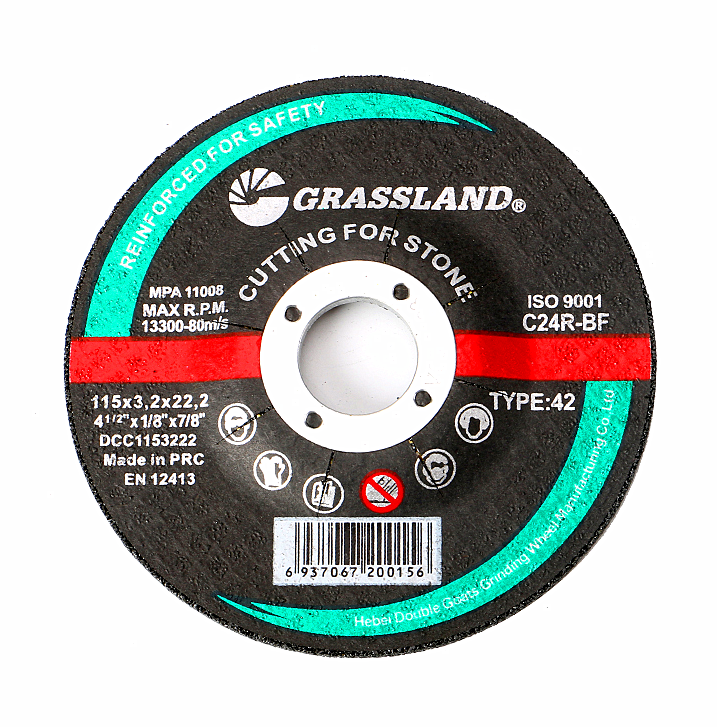
By utilizing a depressed center design (Type 42), these discs enhance side strength and abrasive resistance, making them indispensable for multipurpose metalwork. Whether you are sourcing for a large-scale construction project or a precision fabrication shop, understanding the synergy between grit size, hardness, and bonding agents is key to maximizing the lifespan of your consumables while maintaining a zero-defect output in high-pressure production environments.

Engineering the Core: Aluminium Oxide and Resin Bond Technology
The performance of a high-grade cutting wheel is rooted in its chemical composition. By using Aluminium Oxide as the primary abrasive, these discs provide the necessary hardness to penetrate carbon steel and ferrous alloys efficiently. The "R" grade hardness is specifically calibrated to ensure that the disc does not wear down too quickly (too soft) nor glaze over under heat (too hard), maintaining a consistent cutting rate throughout the tool's life.
The resin bonding agent serves as the structural matrix, holding the abrasive grains in place. In these wheels, a scientifically formulated resin is used to minimize heat production, which is critical for maintaining the structural integrity of the metal being cut. To further enhance safety, reinforced fiberglass mesh is integrated into the construction, providing the necessary tensile strength to withstand centrifugal forces at maximum working speeds of 80 M/S (12,250 RPM).
This combination of high-purity alumina and reinforced bonding ensures that the disc remains stable even under heavy lateral pressure, reducing the risk of disc rupture and improving the overall safety profile for the operator in demanding industrial settings.

Application Logic: Matching Disc Specifications to Material Requirements
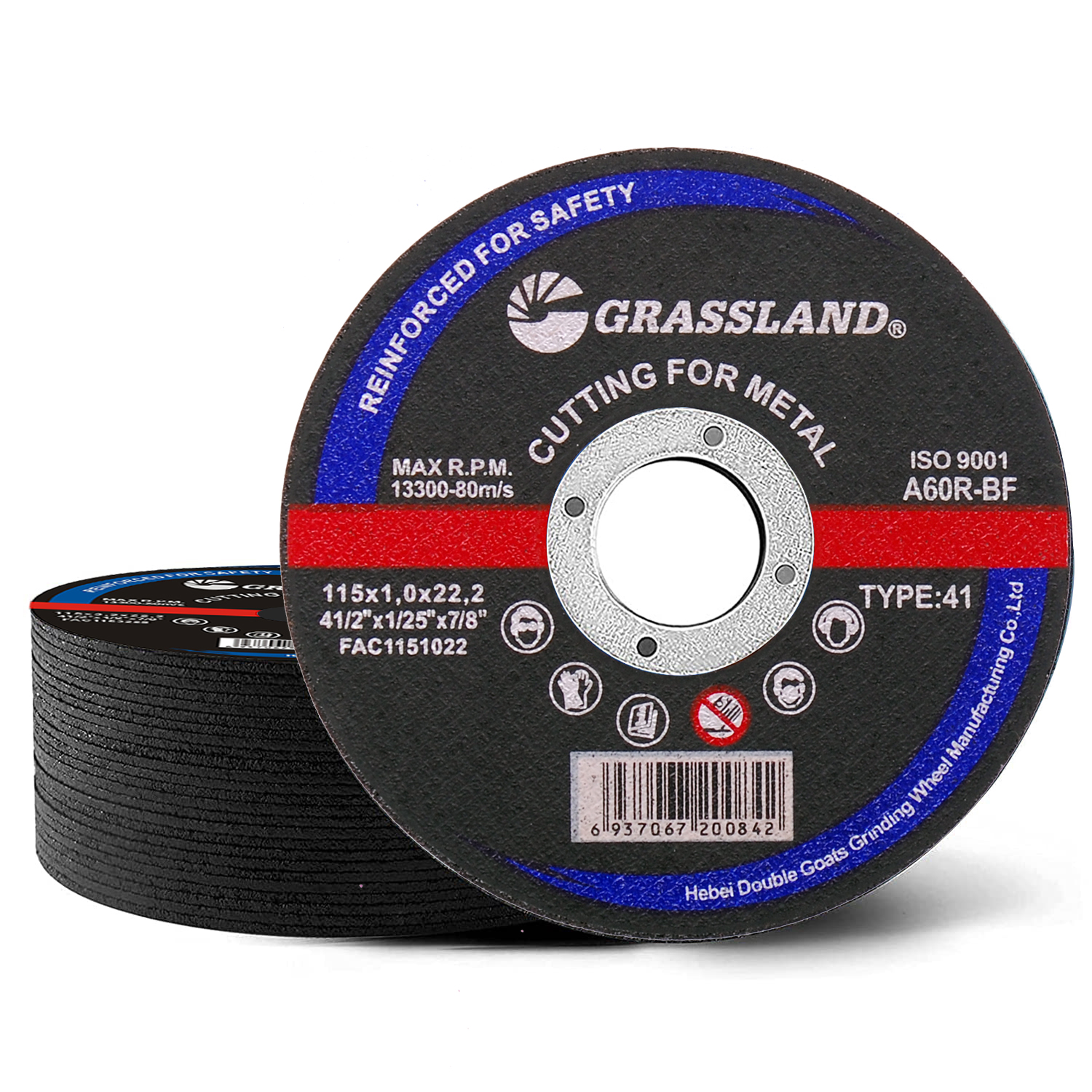
Not all metal cutting is identical, and selecting the wrong thickness or grit can lead to inefficiency or safety hazards. For general-purpose cutting of rebar, channels, and pipes, a thickness of 3.2mm is recommended. This provides the necessary rigidity to prevent the disc from "walking" or bending during the cut, ensuring a straight and clean edge.
When the application shifts to stainless steel (INOX), the requirements change. To prevent contamination and subsequent corrosion, discs with a thickness of less than 2mm are preferred. Furthermore, the composition must contain less than 0.1% iron, sulfur, or chlorine. These specialized discs prevent the transfer of impurities into the stainless steel surface, which is a critical requirement for aerospace, medical, and food-grade fabrication.
The grit size—available in 24#, 30#, 46#, and 60#—allows users to choose between aggressive material removal (lower grit) and a finer finish (higher grit). For heavy carbon steel cutting, 24# or 30# is typically utilized to ensure rapid penetration and high throughput.
Manufacturing Excellence and Traceability in Abrasive Production
Quality in abrasive tools is not achieved by final inspection alone but through a rigorous, controlled manufacturing process. The use of computer-controlled electric heating tunnel hardening furnaces—some of the longest in the world at 52.5 meters—ensures that the temperature is monitored at every key area. This precise thermal treatment is what grants the discs their stable hardness and long-term durability.
A comprehensive quality information traceability system is implemented from the moment raw materials enter the laboratory. No raw material is admitted into the warehouse until it passes strict quality tests. Each production machine is monitored by a professional to test semi-finished products, and physical performance tests are conducted on samples from every batch.
To ensure global compliance, test workpieces imported from the European market are used for final validation. This ensures that every disc leaving the facility meets the MPA EN12413 safety standards, providing peace of mind for distributors and end-users across more than 70 countries and regions.
Technical Specification and Selection Matrix
| Parameter | Standard Value | Application Suitability | Performance Impact |
|---|---|---|---|
| Abrasive Material | Aluminium Oxide | Ferrous Metals / Steel | High Penetration Rate |
| Max Working Speed | 80 M/S (12,250 RPM) | High-Speed Angle Grinders | Enhanced Cutting Efficiency |
| Disc Thickness | 3.2 mm | Rebar, Pipes, Profiles | Increased Side Stability |
| Hardness Grade | R Grade | Carbon Steel / Mild Steel | Balanced Wear Life |
| Safety Standard | MPA EN12413 | Global Industrial Use | Certified Burst Resistance |
Evaluating the Supply Chain: What Procurement Managers Should Prioritize
When selecting a metal cutting disc manufacturer, procurement managers must look beyond the unit price and evaluate the total cost of ownership. This includes the disc's longevity, the speed of the cut, and the safety record of the product. A lower-cost disc that wears out twice as fast or poses a safety risk through inconsistent bonding is significantly more expensive in the long run.
Key evaluation criteria should include:
- Certification Validity: Ensure the supplier holds ISO9001, ISO14001, and OHSAS 18001, as well as MPA certifications to guarantee safety and environmental compliance.
- Production Capacity: A facility with fully-automatic equipment and high daily capacity (e.g., 400,000 pcs) can ensure a stable supply chain and consistent batch quality.
- OEM Capabilities: The ability to customize grit size and thickness allows a company to optimize its consumables for specific machine setups.
- Traceability: A system that allows every batch to be retrieved via records is essential for risk management in large-scale industrial projects.
By partnering with a manufacturer that integrates research, production, and marketing, buyers can secure products that are specifically engineered for their regional metal types and climate conditions.
Future Trends in Industrial Abrasives and Cutting Efficiency
The industrial abrasive sector is moving toward a "precision-first" approach, where the focus is shifting from simple material removal to minimizing the Heat Affected Zone (HAZ) of the cut. Future developments in resin chemistry are aimed at further reducing thermal conduction, allowing for faster cuts without compromising the metallurgy of the workpiece.
Furthermore, the integration of smarter quality control, such as automated Φ230 testing units, is becoming the industry standard. These systems remove human error from the inspection process, ensuring that every single disc meets the exact specifications of the order. For the end-user, this means a more predictable tool life and a reduction in downtime caused by premature disc failure.
As sustainability becomes a priority, manufacturers are also focusing on reducing the environmental impact of the bonding agents and optimizing the recycling of aluminum oxide waste, aligning production with global ISO14001 standards to meet the demands of modern, eco-conscious corporate procurement.
Industrial Cutting Disc Technical FAQ
What is the difference between a 2.5mm and a 3.2mm cutting disc?
The 3.2mm disc is designed for multipurpose heavy-duty cutting of rebar, channels, and thick pipes, offering greater side strength and durability. The 2.5mm disc provides a faster cut with less material waste, making it more suitable for thinner profiles or tasks requiring higher speed.
Why is the MPA EN12413 certificate important for metal cutting wheels?
MPA EN12413 is a stringent European safety standard. It ensures that the cutting wheel has undergone rigorous burst tests and performance evaluations, guaranteeing that the disc can safely operate at its rated RPM without disintegrating.
Can I use a standard carbon steel disc on stainless steel?
It is not recommended. Standard discs may contain iron, sulfur, or chlorine which can contaminate stainless steel and lead to rust. For INOX (stainless steel), you should use specialized discs with less than 0.1% of these elements to maintain the material's corrosion resistance.
What does the "R" hardness grade signify in abrasive discs?
The hardness grade indicates how strongly the abrasive grains are held by the resin bond. An 'R' grade is a medium-hard balance that ensures the disc wears evenly, providing a consistent cut through ferrous metals without glazing over.
How do I maximize the lifespan of my cutting discs?
Avoid applying excessive lateral pressure, as this can warp the disc and cause premature wear or rupture. Ensure the disc is matched to the material hardness, and always operate within the rated RPM specified on the label.
What is the benefit of a depressed center (Type 42) design?
The depressed center design increases the side strength of the wheel and improves abrasive resistance. It allows for a more stable contact point with the workpiece, reducing vibration and enhancing the overall durability of the disc.
Technical References and Standards
- ISO 9001: Quality Management Systems Standards
- European Norms (EN) for Abrasive Product Safety
- MPA Certification Guidelines for Grinding Wheels
- OSHA Safety Guidelines for Abrasive Wheel Use
Selecting the right cutting consumable is a balance of technical specification and supplier reliability. By prioritizing certified manufacturing and material-specific engineering, industrial operations can ensure both maximum productivity and operator safety.
Related Industrial Insights